Composing in Wartime Britain: letters from Elizabeth Poston to William Busch
Our project to digitise, transcribe and contextualise the letters of Elizabeth Poston to William Busch will shed light on the impact on the two composers of living in Britain during World War Two.
From 1943-45 (the final years of World War 2), Elizabeth Poston corresponded at length with the composer William Busch (1901-45). During that time Elizabeth was living in Bedford and in London where she was working as the Director of Music for the British Broadcasting Corporation’s (BBC’s) European Service, a vital service which broadcast to Western and Eastern European countries, including countries occupied through Nazi invasion.
Elizabeth’s role for the European Service appears to have been complex and onerous, and from her own diaries and letters we know that it involved commissioning, advocating for and performing the music of emerging and established composers of many nationalities, as well as devising her own innovative broadcasts, some of which included her accompanying singers in recordings of traditional (folk) music of the countries to which the service was being broadcast. It is clear that the broadcasts were intended to boost morale as well as to contribute to and to help develop the Arts.
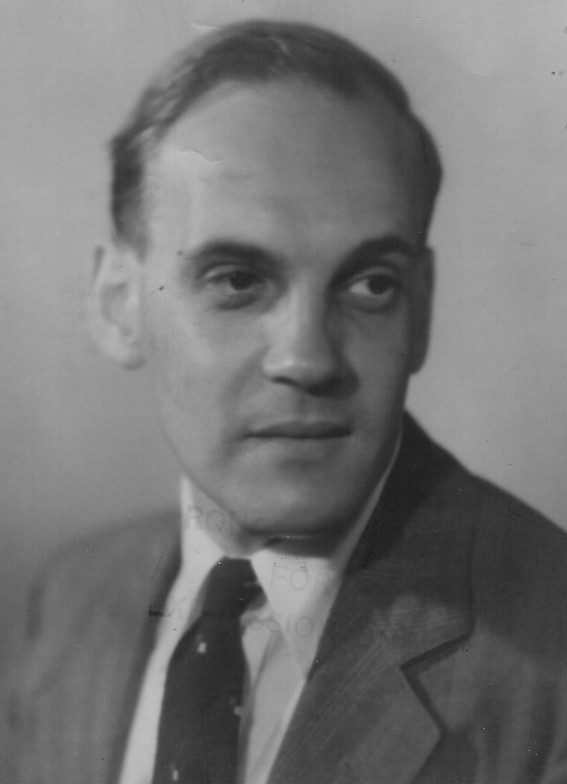
William, a Englishman of German descent, had moved with his wife Sheila, for safety, from London to Cornwall during the War, where he was encouraged by authorities understanding of his conscientious objection to military service to continue to compose and to contribute to the cultural life of the nation in that way.
Elizabeth’s letters to William reveal some of the many challenges of maintaining a creative musical life during the rigours, privations and stresses of Wartime Britain.
Elizabeth encouraged the performance and broadcast of William’s compositions, which were beginning to receive the recognition Elizabeth and others felt it deserved, when William died unexpectedly in January 1945 as a result of pneumonia.
Following his death, Elizabeth corresponded with William’s widow, Sheila, whom she supported in protecting William’s music manuscripts, most of which had not by then been published. Sheila preserved Elizabeth’s letters and with the help of William and Sheila's daughter, Julia, they were partially-transcribed by a private researcher, the late Dr John Alabaster, in 2009. Dr Alabaster also undertook substantial research to understand the context of the content of the letters.
When Dr Alabaster died in 2022 he gifted his ongoing research to MoV, and when Elizabeth Poston’s literary archive and its copyright was gifted by her executor to MoV in 2023 the responsibility for completing this work passed to us.
Work is now underway by MoV to carry out the digitisation and transcription of the letters, and to revise and update the contextual information to ensure that it is as clear as possible to younger generations who may not have studied the events of World War Two at school.
It is hoped and expected that the letters will add significantly to public knowledge around the impact on individual creatives of living through a period of war.
Louise Stewart ©MoV 2026
The composer William Busch (1901-45) ©Claude Harris